
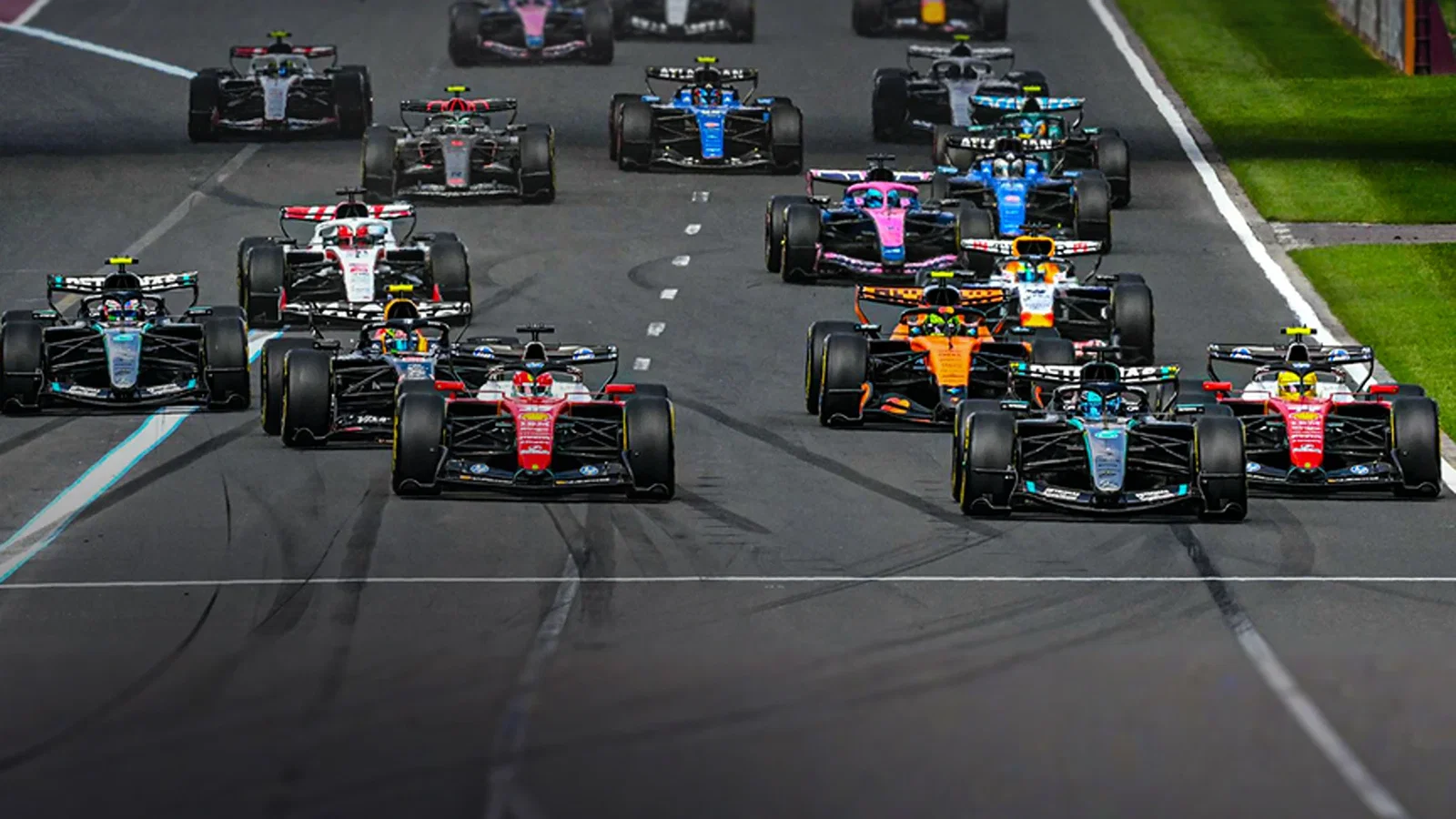
Ferrari team principal Fred Vasseur believes Lewis Hamilton would have won the Spanish Grand Prix regardless of the virtual safety car period.
Hamilton executed a three-stop strategy in Barcelona, with Ferrari committing to the aggressive approach early given the expectation of high tyre degradation throughout the race.
Ferrari made its first pit stop at the end of lap 11, swapping Hamilton’s soft tyres for hards and pulling Mercedes into an early strategic response despite the Silver Arrows preferring a two-stop plan.
Hamilton was just over two seconds behind early leader George Russell before making his second stop on lap 27, switching onto the medium compound tyre.
The performance Hamilton produced on the medium tyre was exceptional, cutting the gap to the two Mercedes cars by several seconds across just nine laps.
He had reduced the deficit to within five seconds of Russell before the Mercedes driver pitted for the second time, leaving Hamilton 16 seconds clear with one stop remaining.
Fernando Alonso’s retirement at Turn 9 with a battery problem triggered the VSC, which Ferrari used to bring Hamilton in for his final stop without losing the lead.
When asked directly whether Hamilton could have won the race without the VSC, Vasseur was unequivocal in his response to the question.
“We would have won the race, perhaps with a bit less,” the Frenchman confirmed, adding: “But we were also in a good situation with a fresh set of tyres at this stage. It was positive for us, but I don’t want to do the calculation what would have been in the race with this or this. But I think we were already in a very good situation.”
In the three laps between Russell’s second stop and the VSC period, the gap between the two drivers had only closed by 1.5 seconds, suggesting Hamilton’s pace advantage was considerable even before the safety intervention.
Mercedes team principal Toto Wolff echoed Vasseur’s assessment, acknowledging that Hamilton’s raw pace made it extremely difficult for his team to have held the win regardless of circumstance.
“Lewis was the quickest of us afterwards,” Wolff noted. “So, even if we would have come out in front of him, it would have been very tricky to hold him behind.”
Wolff also pointed to the internal battle between Russell and Kimi Antonelli as a factor that helped Hamilton close the gap and ultimately cruise to victory in Barcelona.
The close-run duel between the two Mercedes drivers cost them time and allowed Hamilton to remain within striking distance throughout the crucial middle phase of the race.
Wolff suggested that Mercedes may now need to address how its drivers manage their on-track battles to avoid handing rivals a free opportunity to close up.
“There is a third party now getting involved in the championship fight, constructor and driver,” Wolff added. “And in that respect, we discussed internally with the two drivers how we want to handle the situation where we risk of holding each other up. And I think it’s not going to be a problem. It’s just maybe we need to re-calibrate.”