
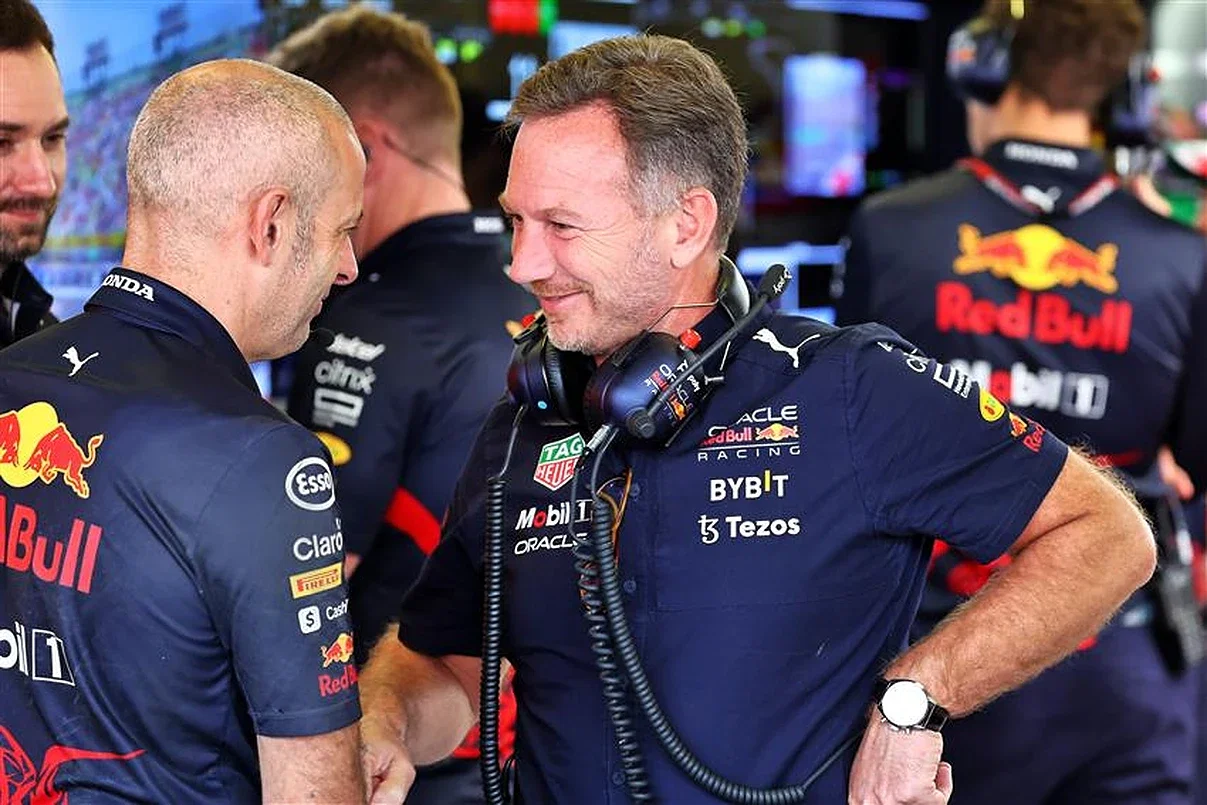
One year ago, Christian Horner was sacked as Red Bull Formula 1 team principal, ending a 20-year reign at the Milton Keynes outfit.
Laurent Mekies stepped in as his successor, bringing an engineering-led philosophy that helped Red Bull mount a remarkable title charge in the second half of 2025.
Max Verstappen came within two points of claiming a fifth world championship, and the team simultaneously launched its new Red Bull Ford Powertrains era.
However, 2026 has presented a far more difficult picture, with Red Bull slipping to fourth in the competitive order behind McLaren, Mercedes, and Ferrari.
Mekies openly admitted that Red Bull struggles at energy-starved circuits, and Silverstone, Spa, and Monza all present similarly uncomfortable prospects for the team.
Verstappen has not hidden his frustration publicly, stating in Canada and Austria that the team had not listened to him, despite Mekies repeatedly calling Verstappen “the most important sensor” in the car.
High-profile departures have added to the narrative of instability, with head of race engineering Gianpiero Lambiase heading to McLaren and chief engineer Paul Monaghan set to join Cadillac.
Helmut Marko also departed over the winter, though that particular exit was described as a matter of choice rather than being enforced by the team.
On the power unit front, Red Bull’s internal combustion engine tops the FIA’s internal rankings, which means the team is ineligible for an ADUO token and cannot modify its hardware in the short term.
Isack Hadjar has been a genuine bright spot, dispelling what many considered the curse of the second seat that had lingered at Red Bull since Pierre Gasly replaced Daniel Ricciardo back in 2019.
The Red Bull Ford power unit programme itself has had an encouraging start compared to the brand new efforts at Audi and Honda, representing one of Horner’s most significant lasting legacies at the team.
Fred Vasseur took charge of Ferrari at the start of 2023, and it took until 2025 for his key signings to truly take effect, a timeline that offers some perspective on Mekies’ position.
Concerns over a power struggle were a contributing factor to Horner’s dismissal, yet with Verstappen’s future still subject to constant speculation, those tensions have not visibly disappeared.
Whether Verstappen remains at Red Bull, departs for another team, or steps away from Formula 1 entirely will largely define the short to medium-term trajectory of the entire organisation.
Mekies inherited a team built over two decades around a specific style of leadership, and adjusting those deeply ingrained habits inevitably takes time and comes with short-term pain.
The genuine judgement on his leadership, and on whether removing Horner was ultimately the right call, will only become truly clear in 2027 and beyond.