
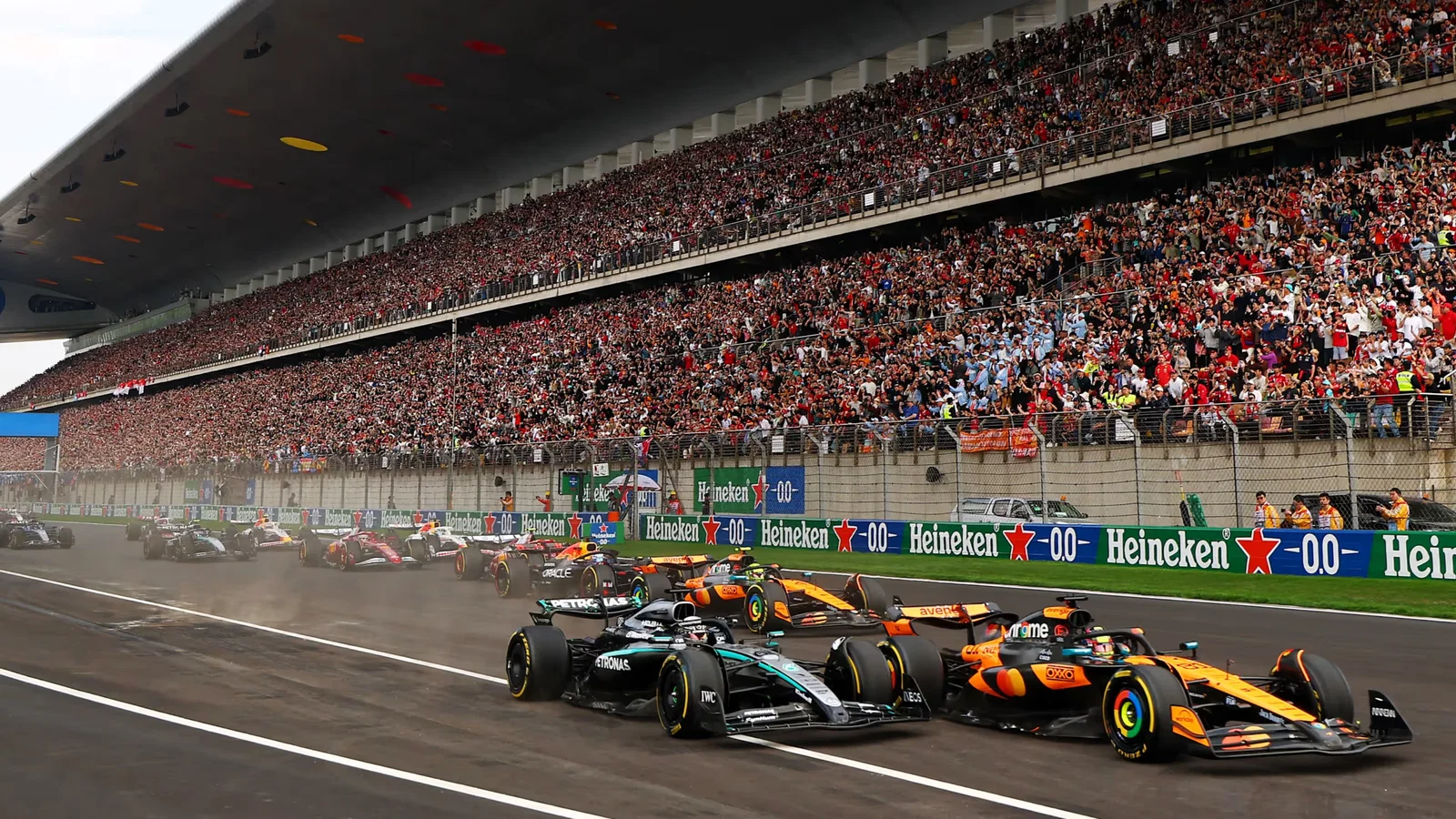
No venue on the Formula 1 calendar has caused McLaren more grief than Las Vegas, and the Woking outfit is arriving with new hardware to try to change that.
The team will introduce further upgrades to the MCL40 at the Nevada street circuit, following components already debuted at the Brazilian Grand Prix in Interlagos.
Team principal Andrea Stella has described the combined package as “the foundation for what will be next year’s car,” giving the update significant implications beyond the remainder of this season.
McLaren’s Las Vegas record reads like a catalogue of misfortune across every edition of the event since its return to the calendar in 2023.
Three years ago, both cars were eliminated in Q1, Oscar Piastri salvaged a solitary point, and Lando Norris crashed out heavily on the third lap.
In 2024, the eventual constructors’ champions could manage only sixth and eighth on the grid before finishing sixth and seventh in the race, finishing 27 seconds behind the leading group.
Last year brought the cruellest blow: Norris claimed pole position and Piastri ran fourth at the flag, yet both cars were disqualified after stewards found the MCL39s’ rearmost skid blocks had worn beyond the permitted limit.
Stella is honest about why Las Vegas tends not to suit McLaren’s machinery, pointing to the near-2km full-throttle Strip section and the team’s known weakness at circuits demanding high top speed.
“We know — we have seen this in Monza, we have seen this in Baku — that when the requirement is to develop top speed, not necessarily McLaren is the best car,” Stella admitted, also referencing the team’s shorter gear ratios as a limiting factor.
Despite those concerns, the mood inside the team is cautiously positive after Norris claimed pole and victory in wet conditions at Interlagos, snapping a five-round podium-less stretch that was the worst the squad had endured since the first half of 2023.
That Brazilian result was powered partly by a 2027 front wing concept Stella said improved driveability and predictability, and additional Las Vegas parts will complement what was introduced there.
Stella reflected candidly on the difficult mid-season stretch, suggesting better qualifying in Austin and Mexico could have produced very different outcomes for Norris had he started from the front.
He also pointed to the Virtual Safety Car timing in Spain as a significant factor that likely denied Norris what should have been a winning result at Madring.
“After the upgrades in Hungary, it was encouraging that we were in a position to win — we should have won Madrid, really,” Stella said, adding that rival teams responded with their own updates and shifted the competitive balance.
Las Vegas will also serve as a useful data-gathering exercise for McLaren heading into the final stretch, with Stella noting the race should reveal where each car is strong and where it falls short under the specific demands of the circuit.
The overriding motivation, however, is simpler: resolving a long-standing score with a track that has repeatedly refused to give McLaren what it deserves.
Stella put it plainly, saying the team wants to “finally be in peace with this venue” after years of frustration that culminated in last season’s devastating post-race disqualification.