
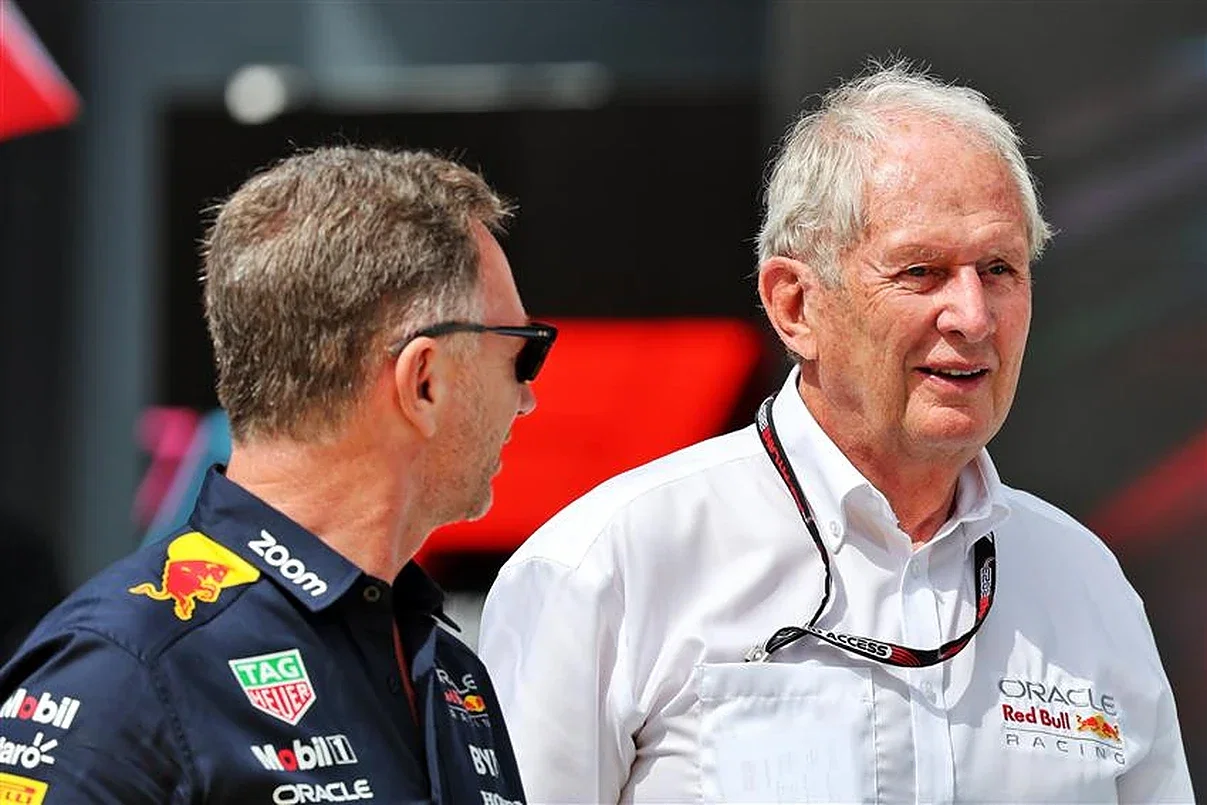
Every door that closes on Christian Horner’s Formula 1 comeback makes the remaining options look less and less like genuine opportunities.
The 52-year-old Englishman has been circling the paddock as a free agent since his departure from Red Bull, publicly bullish about his prospects of returning to a team principal role.
His confidence is not entirely misplaced, as he himself noted recently: “I feel like there’s a desire within the sport to see me come back, which is very flattering.”
Yet desire and opportunity are very different currencies, and the cold arithmetic of an 11-team grid is working against him in ways that charm alone cannot fix.
Two of those 11 teams are Red Bull-affiliated, ruling them out entirely, while Mercedes is considered a non-starter given Toto Wolff’s established authority at the top of that organisation.
McLaren boss Zak Brown is regarded as unlikely to surrender the level of operational control that Horner would realistically demand as a condition of any senior role there.
Ferrari have made their position clear, Aston Martin is off the table for reasons connected to Adrian Newey, and Haas held early-stage conversations with Horner before walking away from them.
Audi, having only recently assumed full control of their F1 project, are considered unlikely to immediately hand over a significant share of the team to an outside figure.
Alpine had been among the more credible possibilities, with Otro Capital’s 24 percent stake seen as the kind of equity foothold Horner openly desires, but discussions in that direction appear to have gone cold.
That leaves Williams and Cadillac, and it was news surrounding the latter that briefly looked like a breakthrough moment for Horner’s ambitions.
Cadillac owner Mark Walter was reported this month to be exploring a sale of the team at a valuation of approximately three billion dollars, a figure that seemed to hand Horner a realistic path back into the sport.
Horner has indicated he has financial backers capable of assembling a nine-figure war chest, but three billion dollars remains an enormous gulf even with serious money behind him.
Beyond the purchase price, Cadillac carries structural disadvantages that Williams boss James Vowles has been highlighting in a broader warning about the cost cap era’s unintended consequences.
Vowles argued this week that the rate of podiums for teams outside the top four has roughly halved since the cost cap was introduced, with infrastructure gaps becoming harder, not easier, to close.
His reasoning centres on amortisation: a team can build a two-hundred-million-pound facility without immediately breaching their annual cap, but absorbing roughly twenty million pounds of that cost per year for a decade quietly destroys competitive headroom.
Cadillac, as the newest entrant on the grid, sits furthest from the infrastructure standard required to compete seriously, still relying on Toyota’s wind tunnel facility in Germany rather than their own.
The team is also investing heavily in a power unit development programme that, by current timelines, will not actually reach the grid until 2029.
History offers little comfort either, with no team formed fresh in the twenty-first century having managed to win a single race, the last new organisation to do so being the old Stewart squad who were eventually absorbed into what became Red Bull.
For Horner, a man who built his reputation on winning championships rather than managing mid-grid obscurity, the Cadillac route may represent the only door still ajar and yet may not lead anywhere he truly wants to go.