
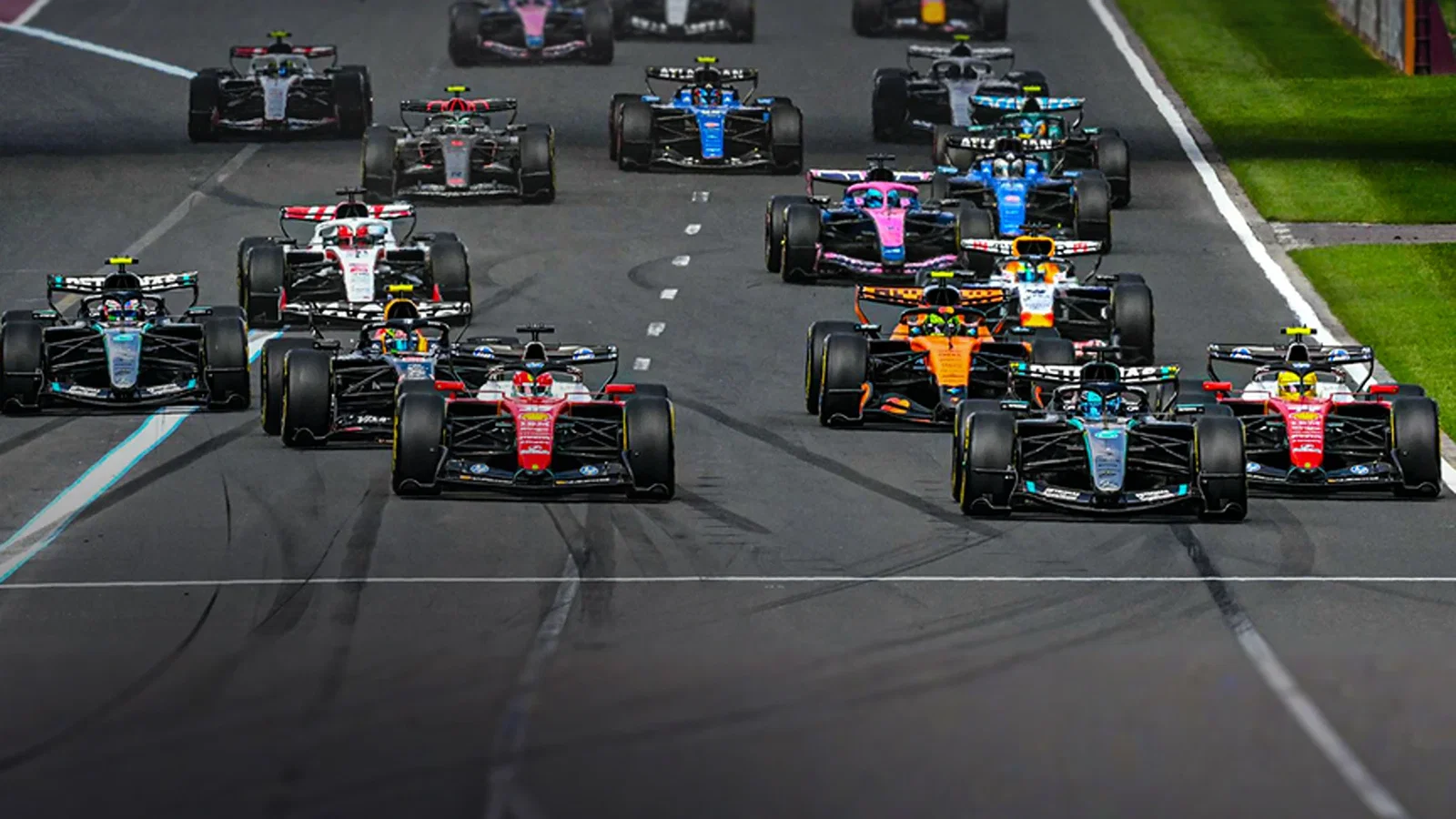
Formula 1 has reached the 16th round of the 2026 season without a single wet-weather race or even a wet session taking place under the new technical regulations.
Rain has threatened on multiple occasions throughout the year, but on-track action has consistently avoided any serious disruption from the weather.
The FIA has responded to early safety concerns by introducing several regulatory changes, including raising tyre blanket temperatures for intermediates, capping electrical power, and banning boost mode in wet conditions.
Tyre concerns have also been a persistent issue, with several drivers reporting difficulty getting the intermediate tyres up to temperature and then keeping them there across a full stint.
Pirelli was eager to see a wet race in Miami due to the high ambient temperatures, while a potential wet race in Montreal was described as “the perfect storm” because of cold conditions and a circuit that makes tyre warm-up particularly difficult.
In Canada, McLaren did start on intermediate tyres, but further rain failed to materialise and the call ultimately proved to be the wrong one.
Alpine’s Pierre Gasly has voiced what many in the paddock appear to believe, suggesting the Sepang International Circuit represents the most favourable possible setting for a wet race this season.
“I think out of any track in the season, if one is good for wet, it’s probably here,” Gasly said, adding that the rough surface, heat, and elevation changes should help clear standing water effectively.
Gasly acknowledged his previous experiences with the 2026 car in the wet were far from encouraging, explaining: “The only time I tried was in January at Silverstone, which was horrendous. And then in Magny-Cours with extremely cold conditions, which didn’t feel good at all. But I expect it to be in a much better place here.”
Pirelli chief engineer Simone Berra echoed that sentiment, confirming that Sepang is the ideal circuit for gathering wet-weather tyre data from real race conditions.
“Honestly, as an engineer, I would like to have some more feedback and data to work with. And, yes, this is the perfect circuit to have rain,” Berra said.
Berra drew a sharp contrast between Malaysia and the concerns that surrounded Montreal, noting the two circuits present almost entirely opposite challenges for the tyres in wet conditions.
“When we went to Montreal, I said it would be the perfect storm because it was cold with a low-energy circuit, but here it’s a completely different story,” Berra explained.
The chief engineer warned that overheating, rather than underheating, could be the primary tyre concern in Malaysia, particularly if rainfall is followed by a rapid dry-out on the abrasive Sepang asphalt.
“The point is that we could end up in a situation where you generate overheating, especially if it’s raining and then dries up quite quickly,” Berra said, noting the overheating effect could be significant.
Pirelli also expects full wet tyres to be the preferred race compound in Malaysia, a reversal of the typical team preference for intermediates, given the scale of rainfall the circuit near Kuala Lumpur regularly experiences.
“When it rains here, it’s quite massive and I would see the full wet as the preferred race tyre,” Berra said, acknowledging that the tyre overheats quickly but performs well with a high level of standing water present.
Despite the optimism surrounding conditions at Sepang, Isack Hadjar has still described the 2026 cars in the wet as “dangerous,” reflecting that some driver concerns remain even after the FIA’s regulatory adjustments.