
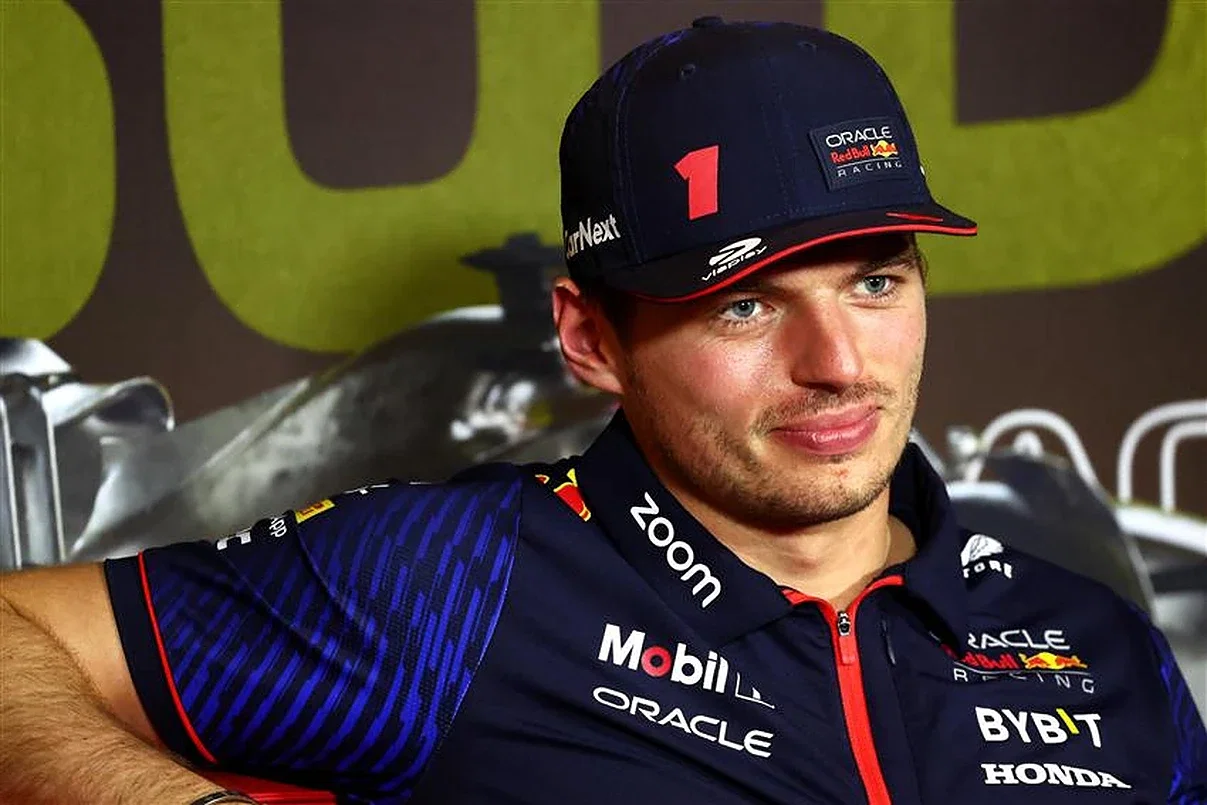
Former Formula 1 driver Ralf Schumacher has explained why Max Verstappen ultimately chose to stay at Red Bull rather than make a move to McLaren this summer.
Verstappen had an exit clause in his Red Bull contract that triggered if he fell outside the top two in the Drivers’ Championship, and at sixth place, that clause activated.
Despite becoming effectively a free agent during the summer break, no team moved decisively to secure the four-time world champion’s signature.
McLaren was the team most heavily linked with a potential Verstappen signing, with reports suggesting talks had taken place between the two parties in recent weeks.
In the end, Verstappen chose loyalty over change and signed a record-breaking contract extension with Red Bull that runs through to 2030.
According to F1 insider Marc Limacher, the deal includes a base salary of 92 million euros per season, equivalent to around $107 million, with bonuses potentially pushing the total four-year package beyond $500 million.
Schumacher, now an analyst for Sky Sports Germany, told German outlet Bild that McLaren simply could not match the financial demands required to land Verstappen.
“There weren’t enough alternatives, it seems. McLaren had been mentioned repeatedly recently, but they apparently couldn’t raise the necessary funds,” Schumacher said.
Beyond the money, Schumacher pointed to the deep bonds of trust that Verstappen, his father Jos, and manager Raymond Vermeulen have built with Red Bull over more than a decade together.
“And on top of that, the Verstappens trust almost no one,” Schumacher continued, highlighting just how difficult it would have been for any outside team to break into that inner circle.
Schumacher also raised concerns about McLaren’s relationship with engine supplier Mercedes, suggesting it introduced an additional layer of uncertainty for Verstappen.
“McLaren uses a Mercedes engine, and there are rumours that Mercedes doesn’t immediately share all its know-how with its customer teams,” Schumacher noted, pointing to a potential competitive disadvantage.
He also outlined the reputational risk Verstappen would have faced had he moved to McLaren and struggled to win immediately, with blame likely falling on the machinery rather than the driver.
“From McLaren’s perspective, that would have been a risk as well. If Verstappen wins, it’s down to the driver. If he loses, it would have been said that even he can’t win with that car,” Schumacher explained.
Lewis Hamilton’s difficult debut season at Ferrari was cited by Schumacher as a cautionary tale about the dangers of switching teams mid-career, even for elite-level drivers.
“And we mustn’t forget what happened to Hamilton after his move. He struggled a lot without testing in the new car. I believe Max is best off at Red Bull. It’s a team he knows and that does everything for him,” Schumacher concluded.
With Verstappen’s future now secured at Red Bull, the 2027 driver market remains active, with 12 seats across the grid yet to be officially confirmed for next season.