
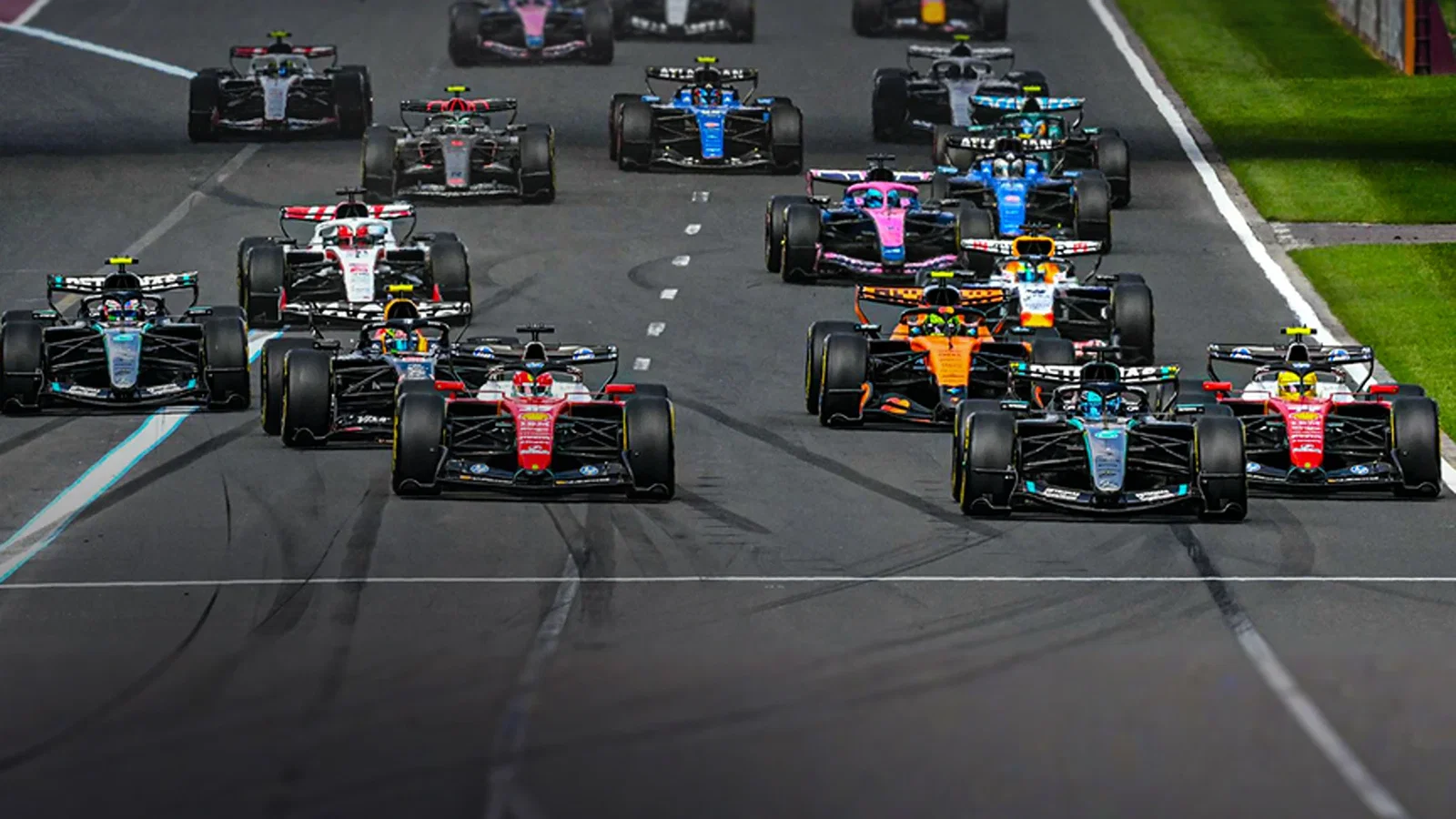
Between the summer break and the final rounds of 2026, just a single point separates Formula 1’s top two constructors, Mercedes and Red Bull, in the standings.
That extraordinary statistic sits in sharp contrast to how this season began, with George Russell securing pole position in Australia by eight tenths of a second over the nearest challengers.
Mercedes ultimately wrapped up both the drivers’ and constructors’ championships with three races still remaining, yet the second half of the season has told an entirely different story about where the competitive order truly stands.
Since August, Max Verstappen has claimed three victories across the last five grands prix, as Red Bull recovered roughly a full second of performance through aggressive development work.
Ferrari also contributed to a remarkable title picture post-summer, with Lewis Hamilton and Charles Leclerc each taking race wins, while Lando Norris was victorious in Hungary and the Netherlands for McLaren, and came agonisingly close to a third triumph in Madrid.
Ferrari team principal Fred Vasseur noted that his squad trailed Mercedes by as many as six or seven tenths through the opening six races, yet the Italian manufacturer progressively closed the gap and introduced innovations such as a rotating rear wing to stay competitive.
“We won races in June, McLaren in July, Red Bull in August or September, and we came back,” Vasseur said in Sao Paulo, adding that the steeper development gradient under new regulations means every upgrade delivers a meaningful step forward.
The convergence is perhaps most visible in qualifying data, where the top five drivers at the inaugural Madrid Spanish Grand Prix at Madring were covered by just 0.195 seconds across four different teams, a margin almost unheard of under fresh regulations.
At COTA, Kimi Antonelli, Verstappen, and Charles Leclerc qualified within 0.230 seconds of one another, while Singapore saw the leading four teams blanketed by three tenths across both sprint and grand prix qualifying sessions.
McLaren chief Andrea Stella argues the budget cap is the underlying driver of this unprecedented closeness at the front, believing the spending ceiling has forced the leading teams to converge in the quality and depth of their engineering talent.
“In my view, teams have never operated at these standards,” Stella said in Austin, pointing to the volume of upgrades each top team has successfully delivered within the financial constraints of the cost cap.
Stella believes the human factor explains why performance levels are so closely matched even in the first year of an entirely new technical framework, with the same experienced engineers applying their craft to fresh regulations.
“Ultimately, it’s the same people that attack a new regime of regulations, so I’m not surprised that, because it was close in the past, it’s close in the present,” he said, framing the competitiveness as a reflection of institutional quality rather than chance.
Red Bull team principal Laurent Mekies acknowledged the speed of convergence has exceeded expectations, suggesting the new regulations may be more restrictive in practice than they first appeared, even as teams continue finding creative solutions.
“The convergence is probably happening earlier than what we all thought,” Mekies said in Brazil, noting that the presence of four teams capable of winning on any given weekend represents a compelling combination of development racing and precision execution.
Toto Wolff was candid that defending Mercedes’s double title success in 2027 will demand the team’s full focus immediately, describing the three remaining races of 2026 as a learning exercise for the campaign ahead.
“The competition has been getting tougher between Ferrari, McLaren, Red Bull and ourselves,” Wolff acknowledged, before warning that runaway championship seasons may now be a thing of the past given how professionally the leading outfits are operating.
With the midfield actually falling further behind the top four under these regulations, partly attributed to cost cap restrictions on smaller teams, the battle at the front of the grid looks set to intensify further heading into 2027.