
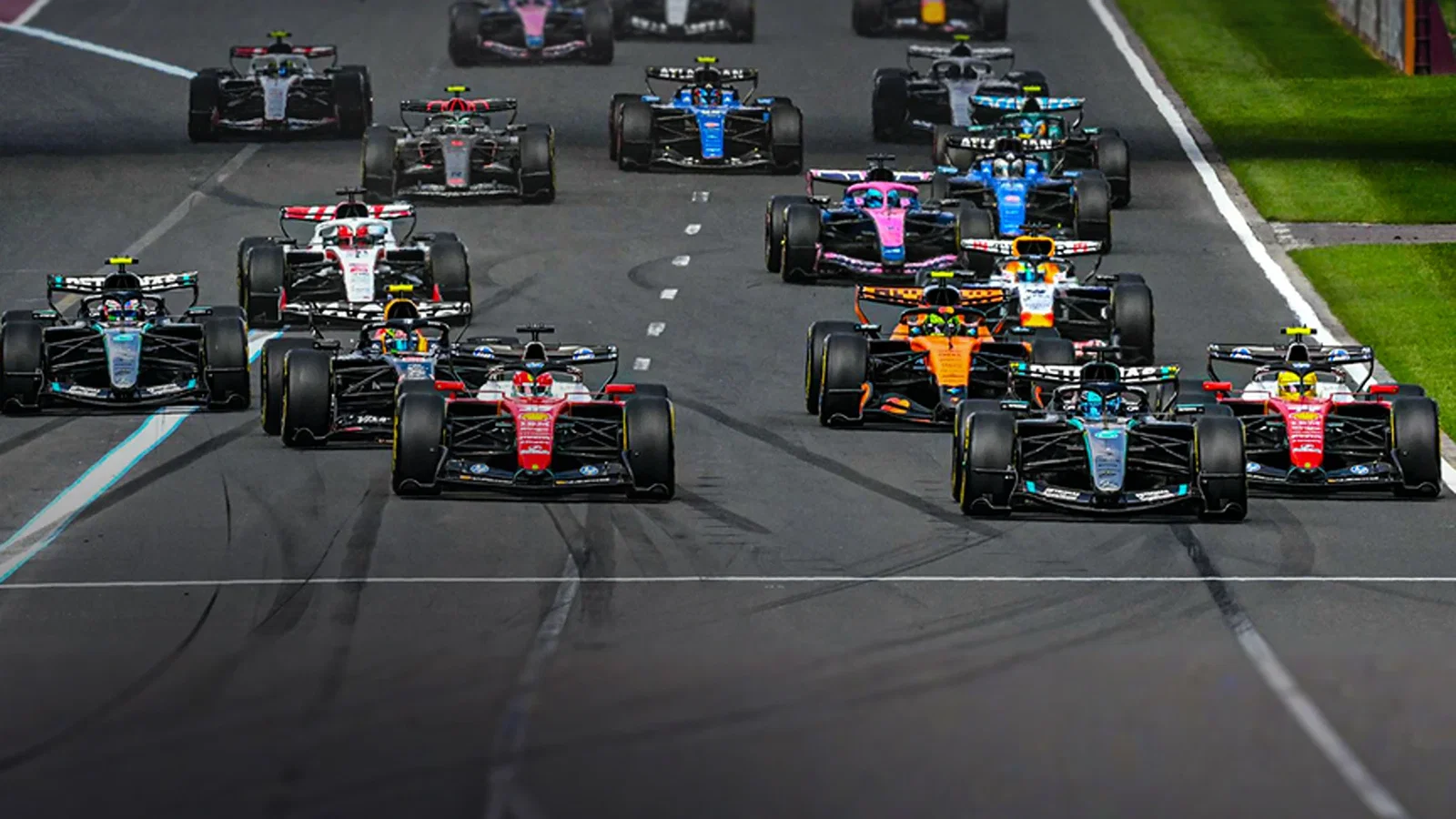
McLaren’s victory at Zandvoort, their second consecutive win following Budapest, underlined just how significant the team’s recent upgrade package has been to their overall competitiveness.
The updates introduced either side of the summer break did more than simply restore aerodynamic load that the car had been lacking across certain earlier rounds of the season.
McLaren’s strengths had already started to show at the Barcelona Grand Prix, with the car appearing in its most convincing form yet at Spa, where faster and longer corners rewarded the MCL40’s characteristics.
The latest aerodynamic developments delivered the additional downforce required to make McLaren the benchmark through high-speed sections, with the performance gains exceeding even the team’s own internal expectations.
However, another factor behind the Zandvoort result passed largely under the radar, namely the debut of new front wheel rims that technical director of engineering Neil Houldey had hinted at ahead of the weekend.
“We introduced a small change to the rear section of the floor to generate a bit of extra load, along with some minor tweaks to the rear brake ducts. We also have new front wheel rims, which will help us build more temperature in the tyres. These updates are not significant in terms of lap time, but they do make us slightly more competitive,” Houldey said.
The significance of this wheel development becomes clearer when examining McLaren’s earlier struggles, particularly at Monaco, where the team failed to challenge for podium positions despite having done so at the same venue the previous year.
Team principal Andrea Stella acknowledged after Zandvoort that Budapest and Zandvoort are high-downforce circuits that naturally suit the car better than other venues on the calendar.
Beyond downforce levels, McLaren’s struggles in Monaco and at earlier rounds in Australia and China were linked to a difficulty generating sufficient front tyre temperatures, which reduced overall grip and contributed to pronounced graining.
In Japan, where graining was not an issue and new asphalt improved overall grip levels, the MCL40 secured its first podium of the season, pointing clearly to the tyre temperature sensitivity that had been limiting the car.
With wheel rim development opened up again in 2026 as part of the new regulations, teams have gained a powerful tool for managing tyre temperatures and operating pressures across different circuit conditions.
The internal cavities within a custom rim design, referred to by some teams as pockets, allow engineers to passively control air exchange and thermal transfer between the rim structure and the tyre compound.
At Zandvoort, McLaren focused specifically on retaining higher temperatures within the front rim structure, manufactured by long-standing partner Enkei, to transfer heat more effectively to the front tyre contact patch.
A more closed wheel cover design was also introduced alongside the new rim, intended to limit the cooling effect of ambient airflow striking the assembly and to simultaneously reduce aerodynamic drag.
The rear rim was left unchanged deliberately, as rear tyre degradation was already a significant factor throughout the Zandvoort weekend, making temperature management rather than heat retention the priority at that end of the car.
Strong gusts across the circuit caused the cars to slide through high-speed corners and key traction zones, making additional front downforce and tyre grip even more critical to extracting a competitive lap time.
Lando Norris ultimately secured pole position on Saturday, with rivals struggling to bring their tyres up to temperature within a single flying lap during the final Q3 attempt, highlighting the advantage McLaren had found.