
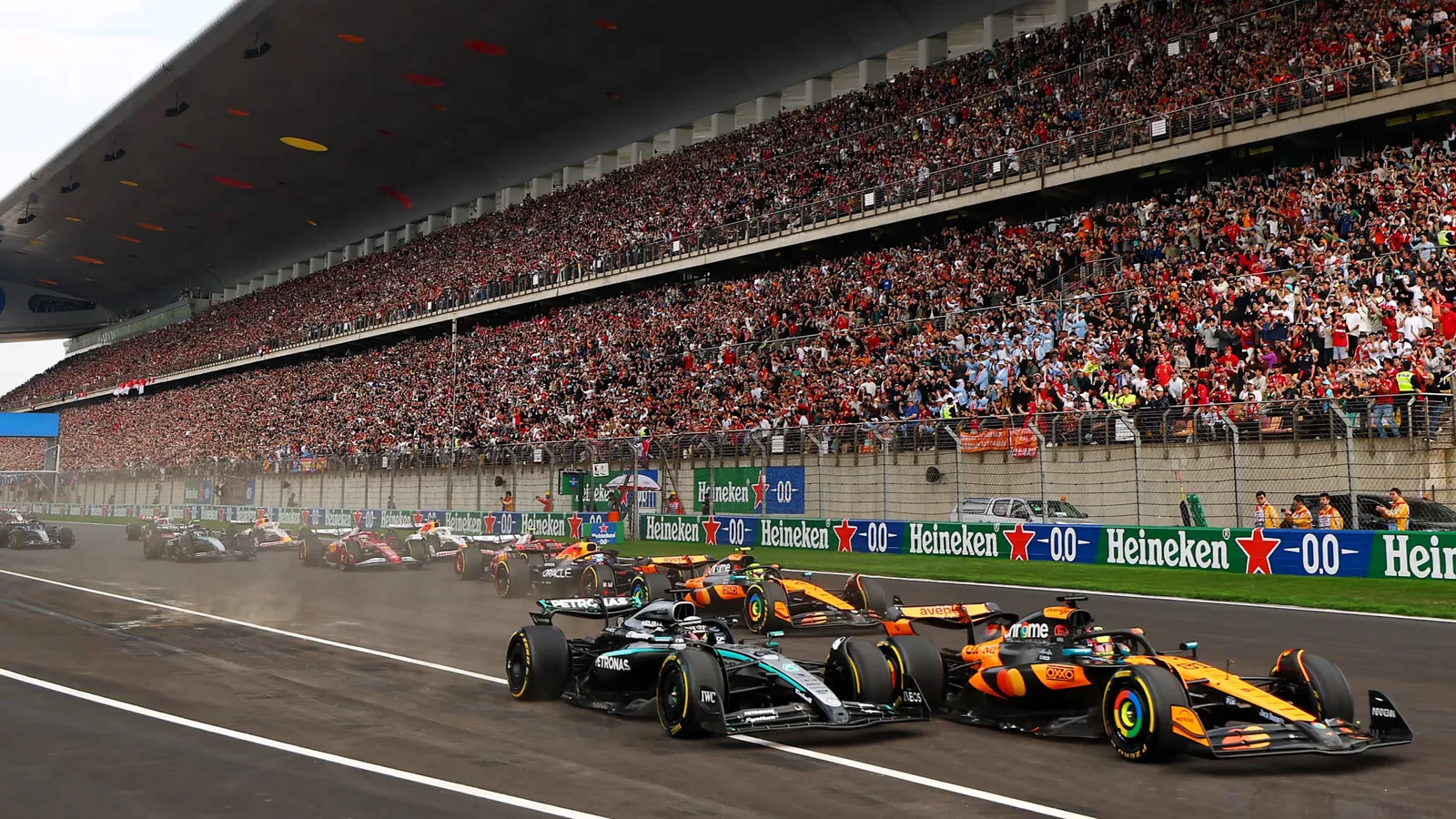
Mercedes has identified the source of the power unit software anomaly that hampered George Russell across the Silverstone and Belgian Grand Prix weekends this season.
The British driver repeatedly complained about a lack of performance on the straights, a feeling that was confirmed by telemetry comparisons with team-mate Kimi Antonelli’s car.
Mercedes’ initial investigations quickly ruled out both a straightforward loss of power from the power unit itself and any obvious deficit in top speed.
From the outset, the situation appeared far from simple, as Russell’s sector times in the opening stretch at Spa were broadly in line with Antonelli’s, inconsistent with a basic power deficit.
Only after qualifying at Spa was the team able to narrow down the search, identifying the control software as the likely source of the anomaly affecting Russell’s performance.
The root cause was found deep within the power unit management software code, a subtle issue that required several days of analysis before engineers fully understood its behaviour.
Essentially, the software was deploying electrical energy too early in the lap, consuming an excessive amount during the first sector and leaving less available in the closing stages.
This created a clear imbalance in energy distribution, most visibly evident in the final sector at Spa, where Russell was left without the electrical power he needed when he expected it most.
A software correction has already been implemented at Mercedes’ Brixworth engine facility, but it still requires on-track validation before the team can be fully confident the fix is effective.
Some within the team believe a less significant part of the issue may also relate to Russell’s driving style, which could have amplified the effects of the underlying software fault.
As McLaren team boss Andrea Stella recently explained, the current Mercedes power units feature adaptive logic that gradually learns a driver’s habits, adjusting energy management based on their individual style at the wheel.
In the presence of a software fault, this adaptive learning process could have further intensified the unwanted behaviour, making the energy deployment imbalance even more pronounced over a race distance.
Mercedes nevertheless believes it has identified the primary cause and does not need to replace the power unit entirely, which represents a significant relief for the team heading into the second half of the season.
However, definitive confirmation of the fix will have to wait until the Italian Grand Prix at Monza, as neither the Hungaroring nor the upcoming race at Zandvoort offer comparable conditions to Silverstone and Spa.
“When that thought is constantly in the back of your mind, it becomes difficult to focus solely on putting together the best possible lap,” a source close to the team explained.
Russell can at least take some comfort from the nature of the Hungaroring circuit, where straight-line power plays a much smaller role in overall lap time than at the venues where his issues were most acute.