
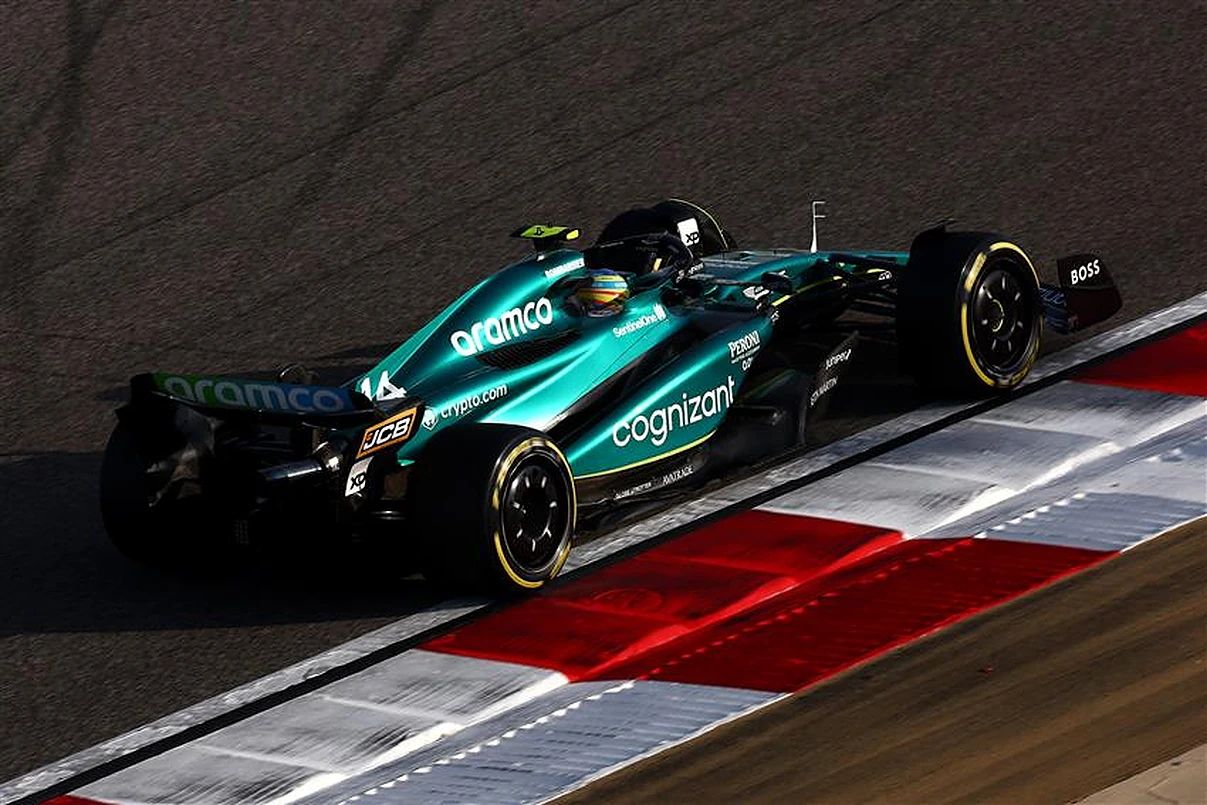
Fernando Alonso and Lance Stroll received Honda’s second specification V6 power unit at the Dutch Grand Prix, marking the Japanese manufacturer’s sole in-season engine upgrade for 2026.
The new unit was shaken down during a filming day following the Hungarian Grand Prix at the end of July, raising hopes of a competitive step forward for the Silverstone-based outfit.
However, both Aston Martin drivers encountered significant driveability issues during Friday running at Zandvoort, turning what should have been a positive weekend into a troubling one on the surface.
Alonso went off at Turn 1 during sprint qualifying, complaining of heavy vibrations from the new engine before ultimately qualifying a distant 22nd and last, three seconds off the pace.
“Free practice was more or less okay but in qualifying we had problems on the engine,” Alonso said, explaining the extent of the difficulties he faced behind the wheel.
“Driveability was pushing on the braking, so it was difficult to stop the car sometimes because the engine was over-delivering,” he continued, outlining the specific behaviour causing him problems.
Alonso also revealed that his SLM mode, the lower drag setting on the 2026 car, failed to function correctly, meaning he was unable to open the rear wing at the critical moments.
“When you brake and the throttle is open, it’s difficult to stop the car,” he added, summing up the dangerous combination of issues he faced throughout the session.
Stroll fared marginally better, finishing 19th and ahead of both Cadillac cars, but he similarly struggled with the behaviour of his freshly installed power unit throughout the day.
“We were struggling with the driveability, and there were a few other things that weren’t quite right, so we need to understand why,” Stroll said after reviewing his difficult Friday performance.
“It’s really windy out there, but it’s the same for everyone,” Stroll added, acknowledging that external conditions alone could not explain Aston Martin’s pace deficit at Zandvoort.
Honda had actually anticipated that introducing the new specification engine would require the team to essentially restart a significant portion of its driveability development work from scratch.
Honda’s F1 project leader Shintaro Orihara confirmed this, explaining that the combustion characteristics of the new unit differ substantially from those of the original specification engine.
“We developed our tools to optimise our driveability. We have made good progress, and we were close to what we wanted to achieve,” Orihara said in a wide-ranging interview.
“But when we introduce the spec 2 engine, the combustion characteristics will change. There will be a big difference,” he continued, highlighting the scale of the recalibration challenge facing his engineers.
“And then engine behaviour will be changed in the cornering phase as well, so we need to develop our driveability again,” Orihara confirmed, underlining that this setback was factored into Honda’s planning.
The issues at Zandvoort represent a short-term pain for what Honda and Aston Martin expect to be a longer-term gain, with the upgraded unit offering meaningful additional power over its predecessor.
Aston Martin had made encouraging progress in Hungary with its major chassis upgrade, which had moved the team back into contention within F1’s competitive midfield battle heading into the summer flyaway races.