
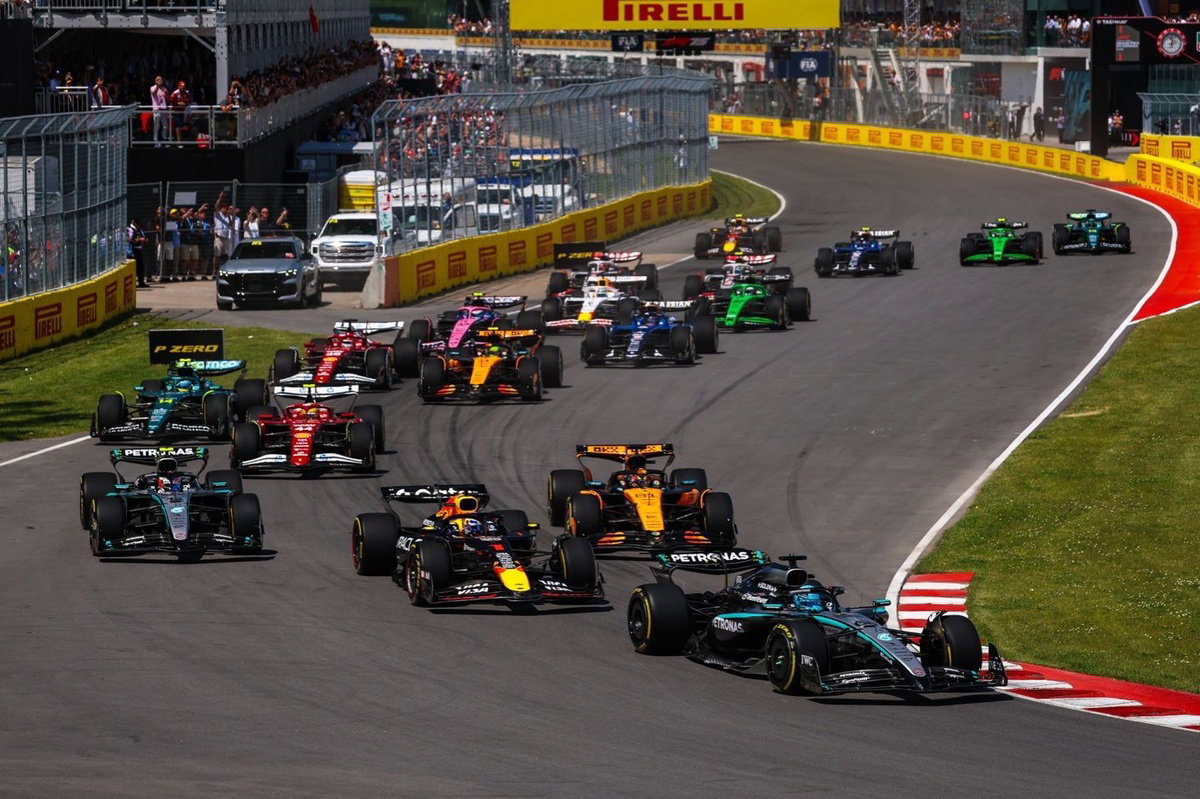
Fred Vasseur has confirmed Ferrari will continue developing the SF-26 rather than shifting resources entirely toward the team’s 2027 challenger.
The Italian outfit’s championship ambitions have taken a serious hit, with Lewis Hamilton now 101 points behind leader Kimi Antonelli following his retirement in Spain with brake issues.
Charles Leclerc’s fourth-place finish at the Spanish Grand Prix compounded Ferrari’s misery, leaving the Scuderia 145 points adrift of Mercedes in the constructors’ standings.
Teams must carefully manage development resources given the financial cost cap and the aerodynamic testing restrictions that govern how work is distributed across a season.
On the engine side, Ferrari has already introduced both ADUO upgrades it was permitted, meaning further power unit gains are off the table for the remainder of the campaign.
While rivals are known to be pushing harder on their 2027 projects, Vasseur has made clear that a full pivot away from the current car is not something he is prepared to do right now.
“We are not in the situation of 12 months ago,” Vasseur said, referencing last year’s regulatory overhaul for 2026, adding that developments made now would carry over to next year’s project.
“The development that we do now, 80% will be carried over,” the Ferrari team principal confirmed, suggesting the work being done still serves a meaningful dual purpose.
When asked directly whether Ferrari’s title challenge was effectively over against Antonelli and Mercedes, Vasseur refused to give a straight answer and pointed to his consistent approach.
“Two or three weeks ago I told you that I will take race by race. I didn’t change,” he insisted, keeping the door open on any remaining mathematical possibilities.
Qualifying pace has emerged as a particular concern for Ferrari, with both Hamilton and Leclerc failing to reach the front row in any of the four sessions since the summer break, including the Zandvoort sprint.
Their average starting position across that run stands at fifth, and the SF-26’s deficit to pole has averaged 0.198 seconds, placing them slower than McLaren and Mercedes but ahead of Red Bull.
Vasseur acknowledged that improving single-lap performance is the most pressing priority, while noting that the underlying race pace gives him some encouragement about the car’s overall competitiveness.
“This we need to improve, because I think when you have a look on the pace, during the race the pace is there,” Vasseur said, pinpointing qualifying as the area demanding the most urgent attention.
“If I have to put the focus of the team on something today, it would be the evolution of the pace during the quali – more than the pace in quali, the evolution, the steps that you can do,” he added, stressing consistency across qualifying runs rather than raw one-lap speed alone.