
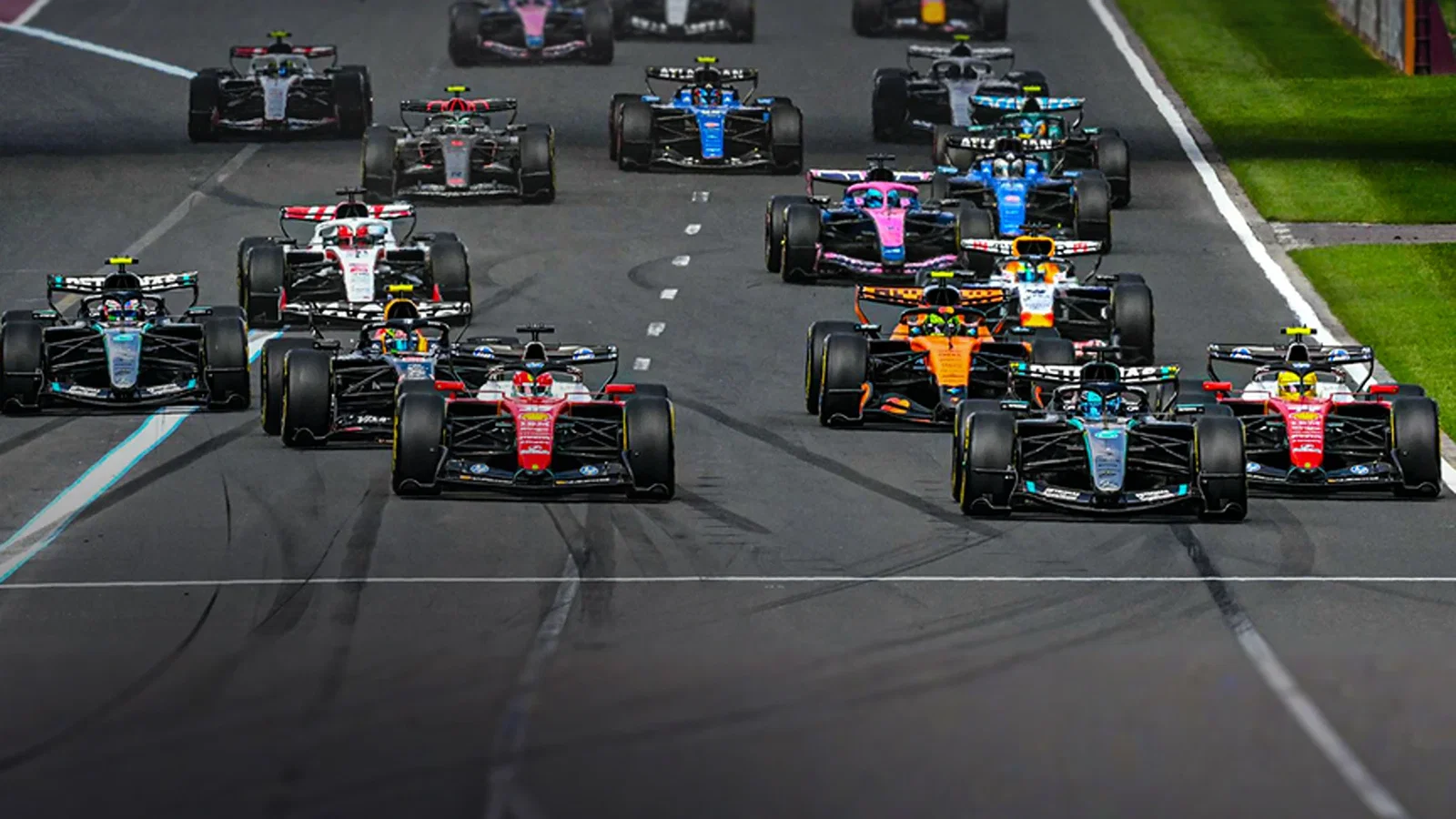
Formula 1’s governing body has confirmed a significant change to grand prix race distances for 2027, cutting the standard length from 305km to 290km.
The decision was made during Monday’s F1 Commission meeting held in London, with final approval still pending from the FIA’s World Motor Sport Council.
The reduction is directly tied to revised power unit regulations for 2027, which will significantly alter the balance between combustion and electrical power delivery.
For 2027, the internal combustion engine output will be upscaled to 420kW, while the maximum power from the MGU-K is reduced to 300kW, except in overtake mode where it will remain at 350kW.
To achieve the increased combustion output, the fuel flow rate for the engine has been increased by five percent, creating a challenge around fuel capacity management during races.
Rather than enlarging fuel tanks to accommodate the higher fuel flow rate, the FIA and Formula One Management chose to shorten race distances to reduce the risk of drivers running out of fuel before the chequered flag.
At most circuits, the 15km reduction will translate to approximately three fewer laps compared to the current race format that fans are accustomed to seeing.
It remains unclear whether the shortened race distances will carry over into 2028, when the powertrain regulations are set to be revised once again.
In 2028, ICE power is scheduled to rise further to 450kW, with an overall 13% increase in fuel flow creating a 60/40 split between combustion and electric power delivery, which will require a larger fuel tank.
The F1 Commission also proposed changes to the rules governing race stoppages, specifically targeting the existing three-hour window that currently applies to red flag interruptions.
Under the proposed changes, the three-hour window would be removed entirely, replaced by a hard stop time for delayed or rain-affected races to account for available daylight.
The FIA stated that “these changes were introduced to ensure that the spectators have the best possible chance to enjoy a full race if disruptions occur.”
Race directors would also be granted expanded authority to extend practice sessions when extended red flag periods eat into running time, following incidents like those seen at the Spanish Grand Prix.
At that event, Lewis Hamilton hit the wall at Turn 22, requiring around 25 minutes of barrier repairs, while a late crash from Ollie Bearman truncated the FP3 session by a further five minutes.
Additionally, gearbox homologation has been lifted for 2027, meaning manufacturers will be free to continue developing their transmissions throughout next season without the current restrictions.