
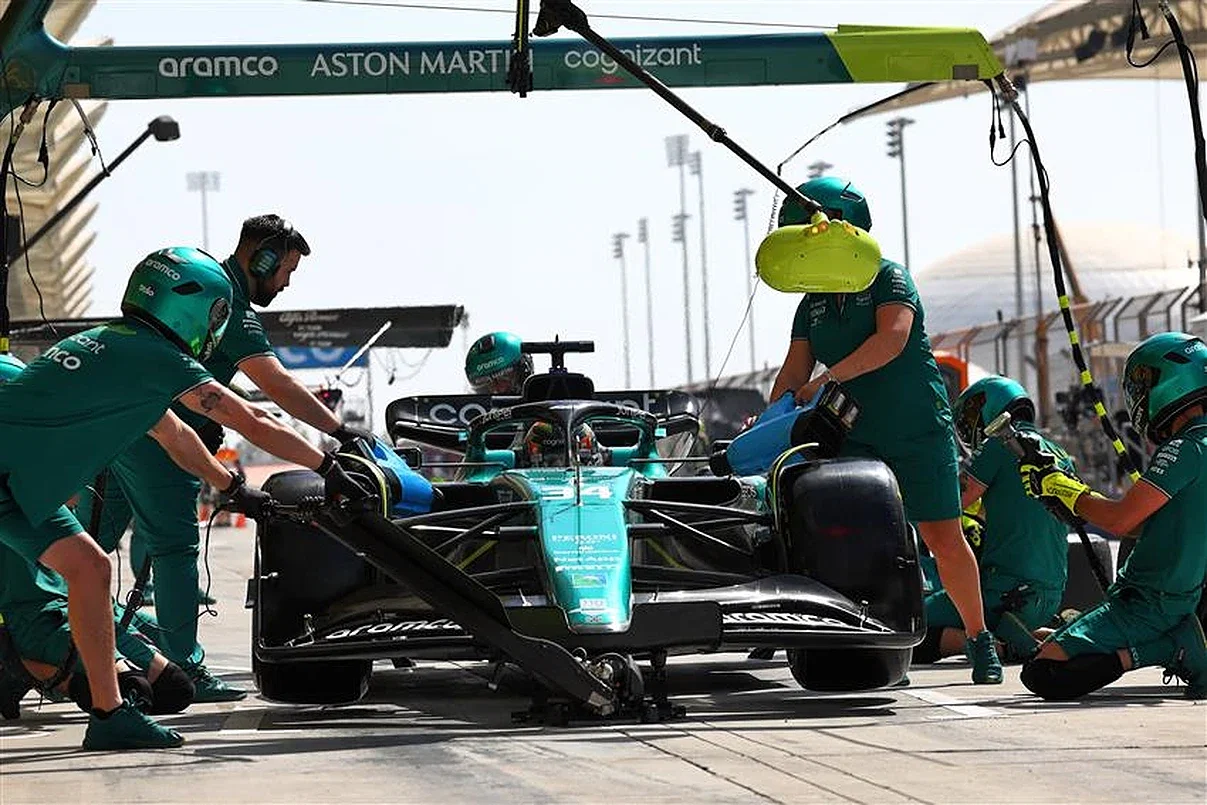
Aston Martin is pushing hard to have its highly anticipated upgrade package ready for the Hungarian Grand Prix, but spare parts availability remains a genuine concern heading into the event.
Chief trackside officer Mike Krack described the update as a “big undertaking” for the Silverstone-based squad, which has endured one of its most difficult seasons in recent memory throughout 2026.
The team’s 2026 campaign has been severely hampered by reliability problems stemming from the interface between the Honda power unit and the chassis, leading to persistent vibration issues and battery failures.
Rather than chase incremental performance gains, Aston Martin made the deliberate decision to focus its resources on solving reliability problems before committing to any aerodynamic upgrades.
That strategy has come at a significant cost in terms of outright pace, with the team currently sitting around a second per lap behind Cadillac in qualifying trim, effectively isolated at the back of the grid.
The sole bright moment of the season came at Monaco, where Fernando Alonso claimed a point after time penalties were handed to both Nico Hulkenberg and Sergio Perez, dropping them outside the top ten.
When asked whether Aston Martin would have sufficient parts to equip both cars in Hungary, Krack called it the “one million dollar question” while remaining broadly optimistic about the team’s ability to deliver.
“Everybody works flat out to get the parts, to get the cars ready. It’s a big undertaking if you decide to do it like that,” Krack said.
“So, I think we will have two cars ready to go. I don’t think we will have five spares of each, to be honest,” the Luxembourger added, offering a candid assessment of the situation at AMRTC.
Krack stressed that the upgrade programme would not hinge on any single component, with contingency plans already established to ensure the team could proceed regardless of whether every part arrived on schedule.
“You cannot make yourself dependent on one part missing and then you cannot do it,” he explained, noting that mitigation strategies were firmly in place for various scenarios across both cars.
Despite the practical challenges, Krack was clear that returning to competitive racing was the overriding priority for everyone within the team after spending much of the season in isolation at the back of the field.
“The most important for all of us is that we go back racing. That is really important for us as a team. And that is what we are aiming for,” Krack said, though he tempered expectations around the size of the expected performance step.
He acknowledged that the gap to both the front runners and the midfield remained substantial, and warned against reading too much into the Hungary result given how circuit characteristics can vary performance from one event to the next.