
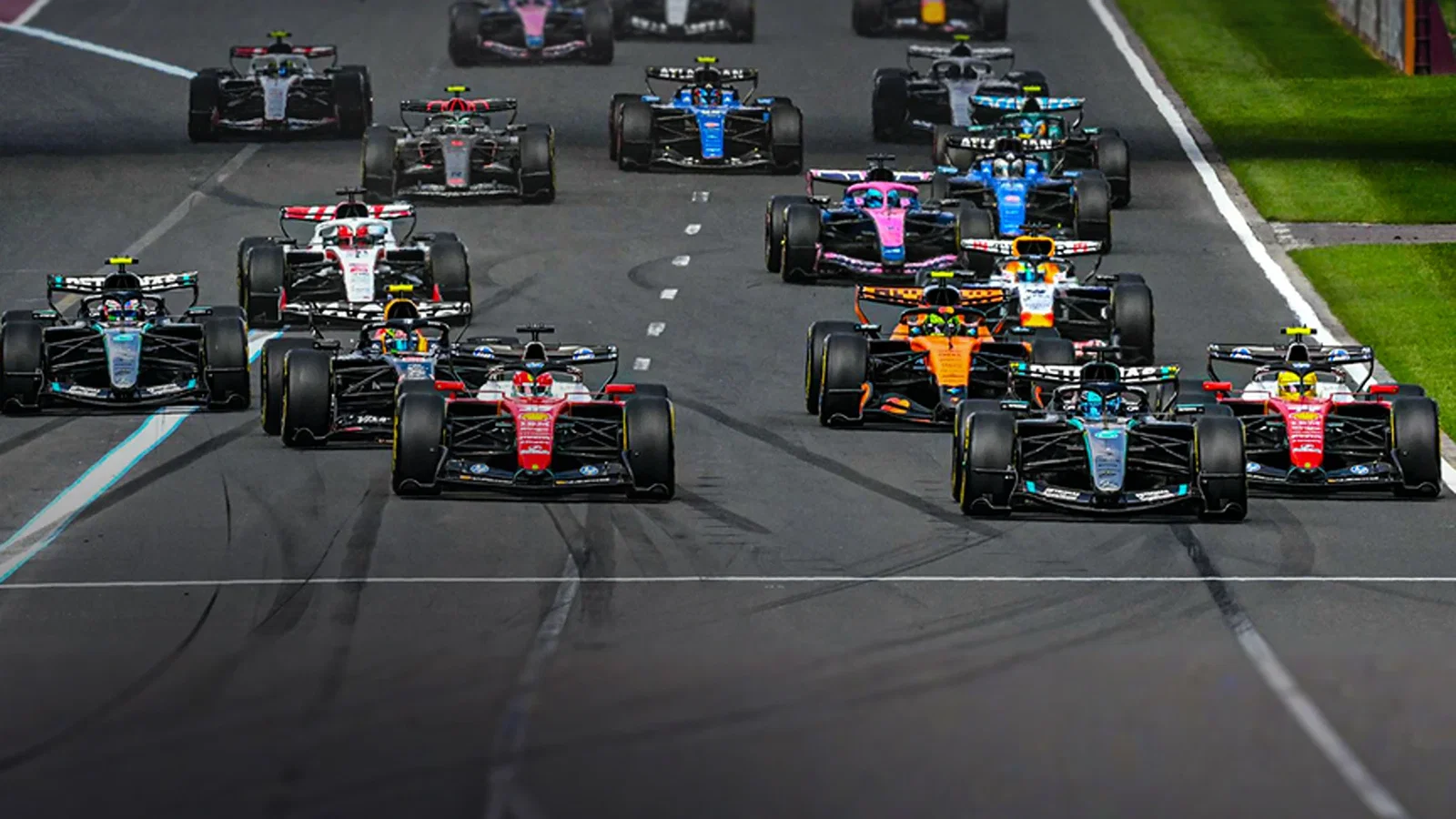
For the first time in 45 years, Formula 1 races in Madrid this weekend, with the Spanish Grand Prix taking place at the brand-new Madring circuit.
Madrid’s 10-year tenure of the Spanish Grand Prix takes over the moniker from Barcelona, which now hosts the race on a biennial basis.
The Madring circuit is built across two distinct zones, creating a dual-natured layout that will challenge drivers and engineers alike throughout the weekend.
Early concept renderings of the circuit drew mixed reactions, with many fans fearing another generic street track similar to the long-defunct Valencia Grand Prix held on what is now a ghost circuit.
The circuit was originally designed by Dromo before the final stages of construction were handed over to Tilke, and a site visit in June suggested the end product avoids the forgettable cookie-cutter label many feared.
The first sector winds through the IFEMA fairground concourse and public access roads, giving it a stop-start feel reminiscent of circuits like Miami and Singapore.
The second sector, built on former Mad Cool festival grounds, features challenging medium- to high-speed corners with significant elevation and camber changes that will genuinely test drivers.
The standout feature of the entire circuit is La Monumental, a 550-metre banked corner drawing a 270-degree arc with a maximum allowed inclination of 24%, which is already being touted as one of the most iconic corners on the calendar.
Charles Leclerc explored the corner during a filming day with Ferrari and was clearly impressed by what he found at the northern end of the circuit.
“It’s a very, very special corner,” Leclerc said. “It’s a corner where I feel in qualifying we’ll have to be very brave because it’s going to be on the limit.”
Leclerc believes the corner has the potential to become a landmark feature of the Formula 1 season, particularly given the grandstand positioned on its outside.
“I do believe it can become one of the most iconic corners of the season, especially with the grandstand. That will add to the experience of that corner. One thing is for sure, and that’s that you will have to have full commitment,” he added.
Questions remain over whether the Madring will produce exciting racing, with overtaking opportunities appearing limited to the straight between Turns 3 and 5.
“It’s going to be a very challenging track,” Leclerc said. “I don’t know about the overtakes, I’m not sure there will be that many overtakes, I hope I’m wrong. But I think qualifying and the challenge of driving such a track is going to be one of the very cool ones of the season.”
One major advantage Madrid holds over Barcelona is its accessibility, with the circuit connected to both the metro network in the south and a commuter train line in the north.
IFEMA’s COO Carlos Jimenez highlighted the transport links as a genuine game-changer for fans attending the event across the weekend.
“Well, you know better than me that coming in and out of a traditional circuit is a nightmare. Here we have both the metro in the south and the commuter train in the north, which is going to be extremely convenient,” Jimenez said.
He also acknowledged that the convenience of nearby city-centre amenities creates pressure on organisers to deliver a high-quality on-site experience for the maximum capacity crowd of 110,000 spectators.
Managing director Luis Garcia Abad, formerly Fernando Alonso’s manager, admitted organising a race from scratch has proven far more difficult than anticipated despite the advantages IFEMA’s existing infrastructure provided.
“Now we have to deliver the best customer experience we can,” Abad said, signalling that while the foundations are in place, the real test begins this weekend.